When nails keep bending, peeling, or breaking, the usual reaction is to search for something that will make them grow faster. That is understandable, but speed is rarely the most useful goal.
A nail can grow quickly and still break before it reaches the length you want. What usually makes the biggest difference is protecting the new growth from the same water, pressure, picking, filing, and product removal that damaged the older section.
A more realistic goal: grow nails that survive daily life with fewer chips, splits, peeled layers, and painful breaks.
You do not need a large collection of oils, hardeners, supplements, and tools. For many people, improvement begins with shorter nails, cleaner edges, regular moisturizer, gloves for wet work, and less aggressive manicuring.
Because fingernails grow gradually from the area beneath the skin at the base of the nail, an existing damaged tip will not transform overnight. It must move forward and eventually be trimmed away.
What “Stronger Nails” Should Mean
A stronger natural nail is not necessarily thick, rock-hard, or extremely long. It is a nail that remains comfortably attached, bends only slightly under ordinary pressure, and reaches a practical length without repeatedly splitting.
A little flexibility is normal. Making a thin nail excessively rigid can sometimes trade bending for sudden snapping.
Rather than judging strength by how hard the nail feels immediately after applying a product, pay attention to what happens over several weeks:
- Are fewer corners breaking?
- Are the tips peeling less often?
- Are snags becoming less frequent?
- Does new growth near the base look smoother?
- Do the surrounding cuticles feel less dry or irritated?
Start With a Nail-Strength Audit
Before changing your entire routine, look for the exact point where the nail is failing. The pattern often reveals more than the word “weak.”
For more detail about layered splitting, see our guide to peeling nails and practical recovery habits.
The Five Pillars of Natural Nail Strength
A shorter free edge has less leverage when it hits a surface, bends backward, or catches on clothing.
Handwashing remains important, but prolonged wet work and repeated soaking can make fragile nails more likely to split.
Hand cream applied over the nails and around the cuticles helps reduce the dry, tight feeling that encourages picking.
Clean clippers and a fine file should remove length and snags without thinning the full nail surface.
Nails last longer when they are no longer used to pry lids, scrape labels, open cans, or remove other nail products.
The most effective treatment may be the habit you stop. A new bottle cannot fully compensate for opening packages with your nails several times a day.
A 14-Day Nail Protection Reset
This two-week reset is not long enough to replace the entire nail plate. Its purpose is to identify damaging habits, calm the surrounding skin, and prevent fresh breaks while you begin protecting new growth.
Shorten, smooth, and simplify
Trim nails to a comfortable length and smooth only the edges that catch. Remove old polish gently. Do not buff the surface, cut attached cuticles, or begin several new treatments at once.
Protect against water, cleaners, and impact
Wear gloves before dishes and household cleaning. Use fingertips or proper tools instead of nails to open and scrape objects. Keep moisturizer near the sink or beside the bed.
Notice which nails still take the most stress
Pay attention to the fingers used for typing, opening containers, lifting stickers, pressing buttons, or picking at skin. Correct the repeated action instead of treating every nail identically.
Keep the habits that were realistic
Continue the changes that fit naturally into your day. Do not add complicated steps simply because the reset is ending. A routine only helps when you can repeat it.
The Minimal Kit You Actually Need
You can begin a protective routine with four basic items:
Cuticle oil, protective base coat, and other products can be added later, but they are not required to begin.
Our guide to at-home manicure tools explains how to choose and use the basics without filling a drawer with unnecessary equipment.
How to Trim and File for Fewer Breaks
Inspect the nail before cutting
Check for pain, swelling, lifting, bleeding, unusual color, or broken skin. Cosmetic trimming should wait when the area looks infected or significantly injured.
Remove length in small sections
Use sharp clippers and leave a little extra edge for shaping. Forcing one large cut can create uneven pressure across the nail.
Choose a shape that suits your routine
Softly rounded or squoval nails are practical because they reduce sharp corners while preserving a natural outline.
File the free edge only
Use light, controlled movement. Stop when snags are gone. Do not keep filing simply to make every nail exactly the same length.
Leave natural ridges alone
Vertical texture does not need to be removed through repeated surface buffing. A cosmetic base coat is usually less destructive than thinning the plate.
Do not file through pain
If the nail feels hot, sore, unusually flexible, or sensitive during filing, stop. Pain is not a normal sign that the nail is becoming smoother or stronger.
Water Protection Without Avoiding Normal Hygiene
Keeping hands clean is essential. The issue is not ordinary handwashing—it is extended or repeated exposure followed by drying, especially when detergents and cleaning products are involved.
Use gloves for:
- Washing dishes
- Cleaning bathrooms or kitchens
- Handling household detergents
- Gardening or working with damp soil
- Tasks that keep the hands wet for an extended period
Remove gloves if the inside becomes damp. Dry the hands and nail folds afterward, then apply moisturizer when needed.
Better wet-work habits
- Put gloves on before starting the task.
- Dry around each nail after washing.
- Apply moisturizer to the nail plate and cuticle area.
- Let damp gloves dry before using them again.
Habits that add stress
- Leaving hands soaked for cosmetic reasons.
- Picking softened skin after a shower.
- Cleaning beneath nails with sharp objects.
- Continuing to work in wet gloves.
Moisturizer Is More Useful Than a Complicated Oil Collection
You do not need a different product for the nail plate, cuticle, sidewalls, and hands. An ordinary moisturizer that feels comfortable and is easy to reach may be enough.
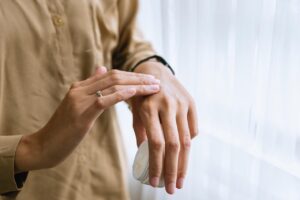
Massage a small amount over the nails and surrounding skin after frequent washing and before bed. A thicker cream or plain ointment may be more convenient at night, while a lighter lotion may be easier during the day.
Cuticle oil is optional. It can improve the appearance and flexibility of dry skin, but it does not replace protection from water, picking, or harsh removal.
- Keep moisturizer beside the sink you use most.
- Apply it over the nail plate, not only to the backs of the hands.
- Use a small amount consistently instead of a heavy layer occasionally.
- Stop using products that cause burning, itching, swelling, or redness.
- Choose simpler or fragrance-free products if your skin is easily irritated.
For more help with the surrounding skin, read our Cuticle Care Guide.
Food Supports Normal Growth, but Nails Do Not Need a “Miracle Diet”
Nail growth is part of overall body function. A varied eating pattern that provides enough energy, protein, vitamins, and minerals supports normal tissue growth.
That does not mean a single food will suddenly harden the nails. It also does not mean that every broken nail proves a deficiency.
Eggs, fish, poultry, dairy foods, beans, lentils, tofu, nuts, and seeds can contribute protein as part of a balanced diet.
Vegetables, fruits, whole grains, beans, nuts, and seeds help provide a range of nutrients instead of relying on one supplement.
Very restrictive eating patterns may make it harder to meet nutritional needs. Concerns about intake should be discussed with a qualified professional.
Iron, thyroid, and other health concerns cannot be confirmed from nail appearance alone. Testing may be needed when symptoms suggest a broader issue.
Be careful with biotin claims
Biotin is commonly marketed for hair, skin, and nail growth, but official nutrition guidance notes that there is limited scientific evidence supporting these claims for most people.
High-dose biotin supplements may also interfere with certain laboratory tests, including some hormone tests. Tell your healthcare professional and laboratory staff about supplements you take.
A better reason to seek advice: several nails changing at once, especially alongside fatigue, hair loss, skin symptoms, weight changes, weakness, or another unexplained concern.
Do Nail Hardeners Actually Help?
A protective coating may temporarily reduce bending or snagging for some people. However, “harder” is not always the same as healthier.
If a formula makes your nails feel extremely rigid, dry, irritated, or more likely to snap, stop using it. Do not layer several hardeners, treatments, and strengtheners at the same time.
| Product | What it may do | What it cannot guarantee |
|---|---|---|
| Protective base coat | Adds a temporary surface layer and may reduce minor snagging | Cannot rebuild nail layers that have already peeled away |
| Nail hardener | May make the surface feel firmer while the product is worn | Does not identify or treat every cause of brittle nails |
| Cuticle oil | Softens and improves the appearance of dry surrounding skin | Cannot prevent breaks caused by long nails or repeated impact |
| Hand cream | Helps reduce dryness around the nails and cuticles | Cannot reverse deep separation, infection, or significant injury |
| Biotin supplement | May be appropriate in specific situations discussed with a professional | Is not a proven universal solution for faster or stronger nails |
Gel, Acrylic, Dip Powder, and Press-On Recovery
Enhancements can create an immediately firm surface, but that temporary firmness does not always reflect the condition of the natural nail beneath it.
Damage commonly occurs during preparation and removal:
- Heavy filing before application
- Scraping hardened product away
- Peeling gel, acrylic, dip, or glue from the nail
- Repeated acetone exposure without moisturizing afterward
- Applying a new enhancement over a thin, sore, or lifting nail
If the natural nails feel weak after removal, keep them short and protect them while the damaged section grows forward. Avoid trying to erase all roughness with a buffer.
The American Academy of Dermatology advises against picking gel polish and recommends moisturizing the nails and cuticles between gel manicures.
Our article about repairing damaged nails after gel or acrylic manicures provides a more focused recovery routine.
Natural Nail-Growth Myths Worth Leaving Behind
“If it tingles or burns, it is working.”
Burning and irritation are reasons to wash the product off and stop using it. Discomfort is not proof that a treatment is strengthening the nail.
“The harder the nail, the healthier it is.”
Natural nails need some flexibility. A very rigid nail may still crack when it meets enough force.
“White spots always mean a vitamin deficiency.”
Small white marks can appear after minor injury and often move forward as the nail grows. Persistent or unusual changes should be evaluated in context.
“Nails need to breathe between manicures.”
Nails do not breathe like lungs. A break from polish may still be useful because it allows inspection and reduces repeated exposure to remover, filing, glue, or enhancements.
“A supplement is the fastest solution.”
Breakage is often connected to daily water, impact, picking, and removal habits. Supplements should not replace an honest review of those factors.
Track Progress Without Checking Every Day
Natural nail improvement is easier to notice when you compare occasional photographs instead of inspecting the same edge several times a day.
Four-week nail record
Use similar lighting and remove polish before taking comparison photographs. Look for fewer new breaks and smoother new growth rather than expecting the old damaged tip to repair itself.
When Weak Nails Are More Than a Cosmetic Problem
Brittleness can be related to normal wear, moisture, aging, picking, manicure habits, and other common factors. However, some changes need professional assessment.
Contact a healthcare professional if you notice:
- Pain, warmth, swelling, throbbing, or bleeding
- Pus or fluid around or beneath the nail
- A new or changing dark streak
- A nail pulling away from the skin underneath
- Green, black, blue, or persistent yellow discoloration
- Significant thickening, crumbling, pitting, or distortion
- Horizontal grooves developing across several nails
- Failure of a nail to grow normally
- Sudden changes involving several fingernails or toenails
- Nail changes accompanied by other unexplained symptoms
Do not repeatedly cover an unexplained change with polish or artificial nails. Cosmetic coverage does not identify the cause and may make the area harder to monitor.
People with diabetes, poor circulation, reduced sensation, immune-system concerns, or difficulty healing should seek professional advice sooner for nail injuries and infections.
Your Stronger-Nail Routine at a Glance
- Keep nails at a practical length for your daily activities.
- Smooth snags before they catch and tear farther.
- Wear gloves for dishes, cleaning, gardening, and prolonged wet work.
- Apply moisturizer over the nails and cuticle area.
- Trim loose hangnails instead of pulling them.
- Do not use nails to open, scrape, pry, or lift objects.
- Avoid frequent surface buffing.
- Remove gel, acrylic, dip, press-ons, and polish without peeling.
- Do not start high-dose supplements based only on nail appearance.
- Monitor changes in color, thickness, shape, attachment, and comfort.
Frequently Asked Questions
How can I make my nails grow faster naturally?
There is no reliable home method that makes nails grow dramatically faster. The more useful approach is protecting new growth so it is less likely to peel or break before reaching the length you want.
Should I keep weak nails short?
Usually, a shorter practical length reduces bending and leverage. You do not have to cut the nails extremely short, but they should not repeatedly catch or flex during ordinary tasks.
Is cuticle oil necessary for stronger nails?
No. It can help soften dry skin around the nails, but regular hand cream may also be useful. Neither product replaces gloves, gentle filing, and safer removal habits.
Can I wear regular nail polish while trying to strengthen my nails?
Yes, provided the nails are comfortable and the polish is applied and removed gently. Avoid peeling it off, aggressively scraping the plate, or covering a painful, discolored, swollen, or lifting nail.
How long should I wait before deciding that a routine is working?
Look for gradual changes over several weeks, such as fewer fresh breaks, smoother new growth, and less peeling at the tips. Complete visual recovery takes longer because damaged nail must grow forward before it can be trimmed away.
Should I take biotin for weak nails?
Do not assume that biotin is necessary. Evidence for routine hair, skin, and nail benefits is limited, and high-dose supplements can interfere with some laboratory tests. Discuss supplementation with a qualified healthcare professional.
Final Takeaway
Growing stronger nails naturally is less about forcing growth and more about preventing damage.
Keep the length practical, file only what catches, moisturize the entire nail area, wear gloves before wet chores, and stop using your nails as tools. These ordinary habits protect new growth more consistently than an overflowing shelf of treatments.
Expect gradual progress. The damaged section must move toward the fingertip before it can be removed, so the best evidence of improvement is fewer new splits and healthier-looking growth near the base.
When nail changes are painful, sudden, widespread, deeply discolored, distorted, or accompanied by other symptoms, treat them as a health concern rather than something to hide cosmetically.
Editorial note: This guide provides general educational information about nail care. It does not replace medical diagnosis, nutritional assessment, or treatment. DolfiNails does not currently use affiliate links in this article.
Sources and Further Reading
- American Academy of Dermatology — Dermatologists’ Tips for Healthy Nails
- Mayo Clinic — Fingernails: Do’s and Don’ts for Healthy Nails
- MedlinePlus — Nail Abnormalities
- NIH Office of Dietary Supplements — Biotin Fact Sheet for Consumers
- American Academy of Dermatology — Gel Manicures: Tips for Healthy Nails
Last editorial review: July 17, 2026

The DolfiNails Editorial Team creates practical and carefully researched content about nail care, manicure techniques, nail art, tools, and beauty products. Each article is reviewed for clarity, usefulness, and reader safety to help readers make better-informed decisions about their nail care routines.