The moment gel or acrylic comes off, damaged nails can look alarming. The surface may appear chalky, scratched, thin, uneven, or covered in peeling layers that were hidden beneath the enhancement.
The first instinct is often to smooth everything with a buffer, apply several coats of hardener, or book another set so no one sees the damage. Unfortunately, each of those choices can add more stress before you understand what happened.
The most important recovery rule is simple: stop removing more nail in an attempt to make the surface look normal immediately.
Products can protect the nail, reduce snagging, and improve the appearance of dryness. They cannot instantly replace layers that were filed, scraped, peeled, or pulled away.
Most cosmetic surface damage improves as healthier nail grows from the base and the weakened section moves toward the fingertip. The goal is to protect that new growth rather than repeatedly “repairing” the old section.
What Nail Repair Can—and Cannot—Do
The visible nail plate is made of hardened keratin layers. Once part of that plate has been substantially thinned or peeled away, a cream, oil, base coat, or supplement cannot reconstruct the missing layers.
Recovery means reducing new trauma, improving comfort, preventing snags, and allowing the damaged portion to grow forward until it can be trimmed away.
A completely lost fingernail may take approximately four to six months to grow back. A smaller damaged section near the tip may disappear sooner because it has less distance to travel.
You should not expect the entire surface to become smooth within a few days. Earlier signs of progress are usually more modest:
- Fewer fresh layers peel from the tips.
- The nails catch less often on hair and clothing.
- The surrounding skin feels less dry or irritated.
- New growth near the base looks calmer and smoother.
- The nails become less sensitive during normal activities.
First Decide Whether This Is Cosmetic Damage
Not every change after an artificial manicure is caused by ordinary filing or removal. Before beginning a home routine, place the nail into one of the following groups.
Rough white patches, mild peeling at the free edge, temporary dryness, shallow scratches, or increased flexibility without pain, swelling, lifting, or unusual color.
Marked thinning, tenderness during ordinary pressure, deep splits, repeated cracking, skin irritation, or damage affecting most nails after one removal.
Increasing pain, warmth, swelling, pus, bleeding, major separation, a new dark streak, persistent green or unusual discoloration, or a spreading rash.
Do not diagnose a discolored nail from an online photograph
Staining, injury, bacterial growth, fungal infection, product reactions, nail separation, and other conditions can produce overlapping color changes. Do not cover an unexplained change with polish, glue, gel, acrylic, or a press-on nail.
Match the First Step to What You See
| What you notice | What may have contributed | Safer first response |
|---|---|---|
| Thin, bendy nails | Heavy filing, repeated drill contact, scraping, or removal of surface layers | Keep them short, stop surface buffing, and pause enhancements |
| Peeling at the tips | Product peeling, acetone exposure, water, dryness, or layered nail damage | Trim or file only the loose free edge and protect it from wet work |
| White, chalky patches | Surface dehydration, filing, scraping, or remaining product residue | Do not buff aggressively; moisturize and watch whether the mark grows forward |
| Deep grooves or heat sensitivity | Over-filing or drill trauma close to thinner areas of the nail plate | Stop cosmetic services and seek advice if discomfort continues |
| Skin itching or swelling | Possible irritation or allergic reaction to gel, acrylic, glue, remover, or another product | Stop the suspected products and seek medical advice when symptoms persist or spread |
| A nail separating underneath | Trauma, allergy, infection, skin disease, or another nail condition | Keep the area clean and dry and obtain professional evaluation |
| Green, dark, or persistent yellow color | Staining, trapped moisture, infection, injury, or another cause | Do not cover it; let a qualified healthcare professional evaluate it |
What to Do During the First 72 Hours
The first few days are not the time for a complete nail makeover. They are a stabilization period.
Confirm that all remaining product was removed correctly
If gel, acrylic, builder gel, glue, or another enhancement remains firmly attached, do not pick it away. Ask the salon what product was used and whether it should soak off, be filed, or require a combination of methods.
Shorten the nails to a comfortable length
Remove enough length that the free edge does not repeatedly bend during typing, dressing, washing, or opening objects. Use clean clippers and leave a small margin for gentle filing.
Smooth only the parts that catch
Use a fine file on the free edge. Do not attempt to erase grooves, white marks, or roughness across the entire nail plate.
Wash gently and dry carefully
Ordinary handwashing is appropriate. Avoid digging beneath the nails or using a stiff brush on tender areas. Dry around each nail fold afterward.
Apply a simple moisturizer
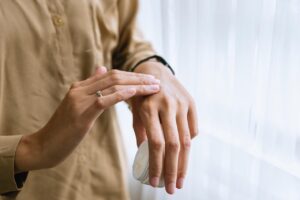
Massage hand cream or a plain moisturizer into the nails and surrounding skin. This can improve dryness and flexibility, although it will not rebuild missing nail layers.
Leave the nails uncovered when observation matters
When there is tenderness, unusual color, significant thinning, or suspected lifting, avoid hiding the nail beneath an opaque coating. Being able to monitor the area is more useful than making it look finished.
Six Things Not to Do Immediately
Pulling gel, acrylic, glue, or dip away can take additional surface layers with it.
A smoother appearance may come at the cost of an even thinner nail plate.
New preparation and future removal can continue the cycle before the existing damage grows out.
Adhesive does not reattach the nail to the skin underneath and may hide moisture or debris.
The cuticle helps protect the area where the nail grows. Cutting irritated skin creates another injury.
If itching, burning, or extra peeling appears, you will not know which new product caused it.
A Six-Week Nail Recovery Plan
This plan will not replace the full nail plate in six weeks. It is designed to reduce new damage and help you judge whether healthier growth is appearing.
Remove snags and stop active damage
Shorten the nails, file only rough edges, moisturize the nail area, and stop picking, buffing, gluing, or covering suspicious changes.
Change how the hands meet water and impact
Wear gloves for dishes and cleaning. Use the pads of your fingers instead of the nail tips to press buttons, open containers, lift labels, and type.
Keep only the products that are helping
Continue moisturizer and protection. If a gentle base coat causes no burning, itching, or extra brittleness, it may remain part of the routine. Remove anything that irritates the nail or skin.
Look at the new growth near the base
Take a photograph in natural light. Compare the area closest to the cuticle with the older damaged portion. The new section should not be repeatedly filed to match the old one.
Decide whether the routine is working
Fewer fresh splits, less tenderness, calmer skin, and smoother growth near the base are useful signs. Persistent pain, worsening separation, discoloration, or changes affecting several nails deserve professional advice.
Do not judge recovery by whether the old tip looks perfect. Judge it by whether you are producing less new damage.
The Minimal Recovery Kit
A large collection is unnecessary. Begin with a few items that solve clear problems.
You do not need a separate serum, mask, oil, cream, hardener, growth polish, and supplement to begin. A simple routine is easier to evaluate and less likely to expose already-irritated skin to several new ingredients.
For help choosing basic tools, visit our guide to at-home manicure tools.
Which Recovery Products Are Actually Useful?
Hand cream
Apply it over the nails, cuticles, and surrounding skin after washing and before bed. A fragrance-free formula may be easier to tolerate when the skin is irritated.
Cuticle oil
Oil can make dry skin feel more flexible and improve its appearance. It is not automatically more effective than a moisturizer you already use consistently.
Ridge-filling base coat
May visually smooth mild surface irregularity without removing more nail through buffing. Do not apply it over pain, infection, major lifting, or unexplained discoloration.
Nail hardener
Some formulas temporarily reduce bending, but a very rigid coating may crack when a flexible nail moves. Stop if brittleness, discomfort, or skin irritation increases.
Nail glue
Glue does not rebuild a thinned nail or reattach a nail that has separated from the skin beneath it. Avoid using it on deep, painful, discolored, or inflamed damage.
Supplements
Do not start iron, zinc, biotin, collagen, or another supplement solely because nails look weak after removal. The timing already suggests that manicure trauma may be relevant.
Moisturizing Helps, but It Is Not Nail Reconstruction
After removal, the nail plate and surrounding skin may feel dry because of solvents, filing, repeated handwashing, or exposure during the service.
Moisturizer can reduce the dry, tight feeling and help the nail remain more flexible during daily tasks. It does not replace nail layers that have already been removed.
A practical schedule is:
- Apply hand cream after washing when the area feels dry.
- Massage a small amount over each nail and cuticle before bed.
- Use a thicker cream or plain ointment at night when tolerated.
- Stop using products that cause burning, itching, swelling, or redness.
- Avoid picking softened cuticles after a shower or hand soak.
Our Cuticle Care Guide explains how to manage dry nail folds without repeatedly cutting them.
How to File a Damaged Nail
Filing should remove leverage and snags, not create a perfectly flat surface.
- Support the finger so the nail is not flexing while you file.
- Use a fine file intended for natural nails.
- Concentrate on the free edge.
- Use light, controlled movements.
- Stop as soon as the edge no longer catches.
- Do not file an area that feels hot, tender, or painfully thin.
Visible roughness is not permission to remove more nail
White patches, grooves, and uneven areas can remain visible while the damage grows out. A slightly imperfect surface is safer than repeatedly thinning the nail to create temporary smoothness.
Acetone Is Not Always the Main Problem
Acetone can dry the skin and nail area, but forcefully picking or filing gel away can cause more direct mechanical damage.
The correct removal process depends on the exact material. Some gel products soak off, while hard gel and certain builder products must be reduced through controlled filing. Acrylic removal may involve filing, soaking, or both.
Identify the product
Ask the salon for the exact service and product type. “Gel” alone is not enough information to determine removal.
Reduce unnecessary skin exposure
When soaking is appropriate, use cotton sized close to the nail rather than saturating large areas of surrounding skin.
Allow the required time
Do not start scraping simply because the product has not lifted as quickly as expected. It may need more time or a different removal method.
Do not pry resistant material
Firmly attached product should not be forced away with another nail, a metal tool, floss, a tip, or clippers.
Stop before the natural nail is over-filed
A thin layer of compatible product may be safer to leave temporarily than continuing to file until the natural plate becomes hot or painful.
Moisturize afterward
Wash and dry the hands, then apply moisturizer to the nails and surrounding skin.
Avoid unknown “instant gel removers”
The FDA has identified some products marketed as rapid gel-polish removers that contained methylene chloride, also called dichloromethane. Avoid products with unclear ingredient information or dramatic claims that hardened gel will dissolve almost immediately.
Protect the Nails From Everyday Water and Impact
Normal handwashing should continue. The larger problem is prolonged wet work and repeated exposure to cleaners while the nail is already thin or peeling.
Helpful protection
- Wear gloves before washing dishes or cleaning.
- Dry around the nail folds after washing.
- Use tools to open packages and scrape labels.
- Keep nails short enough that they do not bend during tasks.
- File a snag before it tears farther.
Repeated sources of damage
- Working for long periods in damp gloves.
- Using nails to open cans or containers.
- Picking at lifted surface layers.
- Scraping beneath the free edge with sharp tools.
- Keeping weak nails long for appearance alone.
For a broader routine, read our guide to healthy nail care at home.
Should You Wear Regular Polish During Recovery?
Regular polish may be acceptable when the nails are comfortable, firmly attached, and free from suspicious discoloration or inflamed skin.
A protective base coat and sheer color can reduce snagging and make surface irregularity less noticeable. However, the manicure will still need removal, so frequent color changes can add more solvent and rubbing.
Consider leaving the nails bare when:
- You need to monitor a color change.
- The nail is tender or unusually sensitive.
- There is separation from the nail bed.
- The surrounding skin is red, itchy, swollen, or blistered.
- You are unsure whether remaining material is natural nail or product.
A sheer manicure is still cosmetic coverage. Remove it and inspect the nail if pain, color, attachment, or skin symptoms begin to change.
Do Your Nails Need to “Breathe”?
Nails do not breathe like lungs. A break from enhancements can still be useful, but for a different reason.
Time without gel, acrylic, dip, glue, or press-ons reduces repeated preparation and removal. It also lets you see the bare nail and observe whether new growth is improving.
“Air exposure repairs the nail.”
The benefit of a break comes mainly from avoiding more filing, peeling, adhesives, curing, solvents, and product contact—not from the nail absorbing oxygen.
“A hard coating means the natural nail is stronger.”
The coating creates temporary external structure. You can only assess the natural nail after the product has been removed correctly.
“All roughness should be buffed away.”
Buffing removes material. On an already-thin nail, chasing complete smoothness can increase bending and sensitivity.
“Biotin will quickly reverse manicure damage.”
There is limited scientific evidence supporting routine biotin use for healthier hair, skin, and nails in most people. High-dose biotin can also interfere with some laboratory tests.
Nutrition and Supplements
A balanced eating pattern supports normal nail growth, but manicure damage is not automatically evidence of a nutrient deficiency.
When nails became thin immediately after filing, drilling, peeling, or removal, external trauma is an obvious factor to address first.
Do not begin high-dose iron, zinc, biotin, or another supplement based only on appearance. Nutritional deficiencies and other health conditions require proper context and, in some cases, laboratory evaluation.
Speak with a qualified healthcare professional when several nails change along with symptoms such as:
- Unusual fatigue or weakness
- Hair loss
- Skin changes
- Unexplained weight changes
- Changes involving both fingernails and toenails
- Nails growing unusually slowly or stopping
How to Track Recovery Without Guessing
Check progress every two weeks rather than inspecting the same damaged area several times a day.
Two-week nail recovery record
Photograph the bare nails in similar natural lighting. Look for a band of smoother new growth near the base and gradual movement of the old damage toward the free edge.
When to See a Dermatologist or Another Healthcare Professional
A nail technician can remove cosmetic product and explain a manicure system. A technician should not diagnose infection, allergy, melanoma, psoriasis, or another medical condition.
Seek professional medical advice if you notice:
- Increasing pain, warmth, swelling, or throbbing
- Pus, drainage, bleeding, or an open wound
- A new or changing dark streak
- Green, blue, black, or persistent yellow discoloration
- A nail separating significantly from the skin beneath it
- A spreading rash, blisters, or swelling after nail-product use
- Major thickening, crumbling, pitting, or distortion
- A nail that stops growing normally
- Symptoms that worsen instead of improving after product removal
- Changes affecting several nails without a clear cosmetic cause
Seek more prompt advice if you have diabetes, reduced circulation, reduced sensation, immune-system concerns, or difficulty healing.
When Is It Reasonable to Get Gel or Acrylic Again?
There is no universal number of days. Base the decision on the condition of the nail rather than impatience with its appearance.
Before booking another enhancement, check that:
- The nails are not painful during ordinary pressure.
- There is no swelling, pus, bleeding, or broken skin.
- There is no unexplained green, dark, or changing discoloration.
- The nails remain firmly attached to the skin beneath them.
- New growth near the base looks reasonably healthy.
- You understand what caused the previous damage.
- The technician plans to minimize filing on the natural nail.
- You know how the exact product will be removed.
- You are willing to choose a practical length and shape.
If the nails still feel painfully thin, continue the recovery routine rather than using another enhancement as a protective shell.
How to Reduce Damage During the Next Manicure
| Before the service | During application | During removal |
|---|---|---|
| Show the technician the current nail condition | Ask for minimal filing on the natural nail | Identify the exact product before beginning |
| Choose a length that suits daily activities | Keep uncured product away from the skin | Never peel, pry, or snap material away |
| Discuss previous itching, swelling, or reactions | Speak up about burning, pain, or intense heat | Allow enough time for the correct method |
| Confirm whether gel is soak-off or file-off | Avoid cutting attached cuticle tissue | Stop before the natural nail becomes hot or tender |
| Schedule maintenance before major lifting develops | Use a compatible product and curing system | Moisturize and inspect the bare nails afterward |
Protect the hands during gel curing
The American Academy of Dermatology recommends applying broad-spectrum, water-resistant SPF 30 or higher to the hands before a gel manicure. Dark, opaque fingerless gloves designed for nail-lamp use are another option.
Keep sunscreen off the nail plate immediately before product application so it does not interfere with the manicure system.
For a detailed comparison of enhancement systems, visit Gel Nails vs Acrylic Nails.
A Simple Daily Recovery Routine
- Keep nails at a short, practical length.
- File only snags at the free edge.
- Apply moisturizer over the nails and cuticles.
- Wear gloves for dishes and household cleaning.
- Use proper tools to open, scrape, lift, and pry objects.
- Do not pick peeling nail layers or remaining product.
- Do not buff the nail surface repeatedly.
- Pause enhancements while the nails remain tender or severely thinned.
- Monitor changes in color, attachment, shape, and comfort.
- Seek professional help when warning signs appear.
Frequently Asked Questions
Can nails damaged by gel or acrylic fully recover?
Many nails with cosmetic surface damage improve as new nail grows and the affected section moves toward the tip. Recovery depends on how deeply the nail was damaged and whether the growth area beneath the skin was injured.
How long will damaged fingernails take to grow out?
A completely replaced fingernail can take approximately four to six months. Damage already near the free edge may be trimmed away sooner, while damage close to the base will take longer to move forward.
Should I buff away white or rough patches?
No. Lightly smooth a snag only when it catches. Repeatedly buffing the full surface removes more nail material and may increase thinning or sensitivity.
Can I apply a nail hardener during recovery?
A gentle protective coating may reduce bending or snagging when the nail is comfortable and firmly attached. Stop using it if brittleness, burning, itching, redness, or sensitivity increases.
Is acetone always bad for damaged nails?
Acetone can dry the nail area, but correct soaking may be less damaging than picking or aggressively filing off a soak-off gel. Use the removal method intended for the exact product and minimize unnecessary exposure to surrounding skin.
Can I cover damaged nails with press-ons?
Press-ons still involve adhesive and later removal. Avoid them when nails are painful, severely thinned, discolored, lifting, or surrounded by irritated skin. Cosmetic coverage does not treat the cause.
Final Takeaway
Repairing nails after gel or acrylic does not mean forcing the old surface to look perfect. It means protecting the nail while the damaged section grows forward.
Shorten the free edge, smooth only what catches, moisturize the entire nail area, wear gloves during wet work, and stop peeling, scraping, buffing, and covering warning signs.
Use products for a clear purpose. Moisturizer helps dryness, a fine file removes snags, and a gentle base coat may provide temporary cosmetic support. None of them can instantly rebuild missing nail layers.
When pain, swelling, pus, a spreading rash, unusual discoloration, significant separation, or a changing dark streak appears, stop treating the problem as ordinary manicure damage and seek qualified medical advice.
Editorial note: This article provides general educational information about cosmetic nail recovery. It does not replace medical diagnosis, allergy assessment, treatment, product instructions, or individualized advice from a qualified professional. DolfiNails does not currently use affiliate links in this guide.
Sources and Further Reading
- American Academy of Dermatology — Artificial Nails: Tips for Reducing Nail Damage
- American Academy of Dermatology — Gel Manicures: Tips for Healthy Nails
- American Academy of Dermatology — Removing Gel Nail Polish at Home
- American Academy of Dermatology — Nail Changes a Dermatologist Should Examine
- U.S. Food and Drug Administration — Nail Care Products
- U.S. Food and Drug Administration — Cosmetic Products Containing Methylene Chloride
- MedlinePlus — Nail Injuries and Regrowth
- NIH Office of Dietary Supplements — Biotin Fact Sheet for Consumers
Last editorial review: July 17, 2026

The DolfiNails Editorial Team creates practical and carefully researched content about nail care, manicure techniques, nail art, tools, and beauty products. Each article is reviewed for clarity, usefulness, and reader safety to help readers make better-informed decisions about their nail care routines.