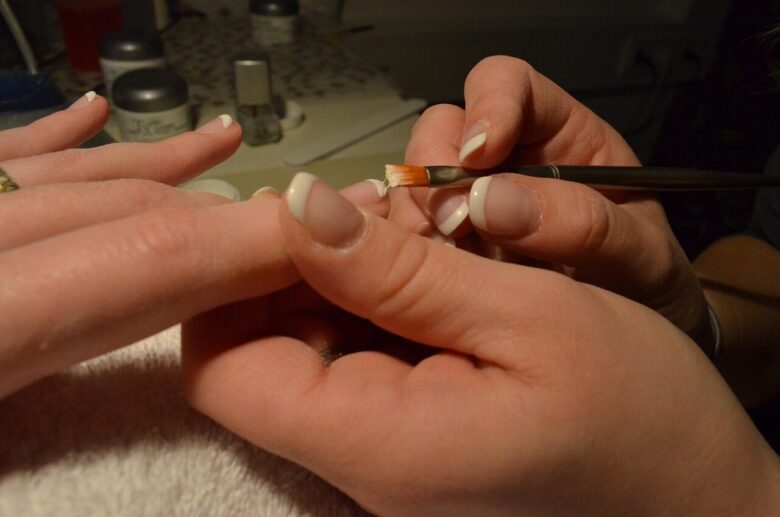
You do not need a drawer filled with dotting tools, striping brushes, stamping plates, curing lamps, and decorative accessories to create an intentional manicure at home.
For many simple designs, the brush already inside the polish bottle is enough. When you need a different shape, an ordinary toothpick, bobby pin, small piece of tape, clean makeup sponge, or plastic wrap can provide the extra control.
The goal is not to imitate every professional tool with a household object.
The goal is to select a design that naturally matches the object you already have. A toothpick works well for tiny dots, but poorly for long smooth lines. Tape creates a sharp division, but only when the base color is completely dry.
A no-tool manicure looks most polished when it uses one main technique, a limited color palette, and enough open space for the design to remain clear.
What “Without Special Tools” Actually Means
You will still need ordinary manicure products such as polish, remover, a base coat, and a top coat. “Without special tools” means that the design does not depend on professional nail-art brushes, stamping equipment, an electric file, extension products, or a curing lamp.
Household objects should touch the polish lightly. They should never be pushed into the skin, forced beneath the nail, or used to scrape the natural nail plate.
Use rounded objects for dots, flat tape for edges, and a sponge for diffuse color.
Rest your elbows and both hands on a table instead of painting while holding them in the air.
Improvised items become difficult to control when they are overloaded or dripping.
A few repeated details usually look cleaner than filling every open area.
The easiest design is the one you can repeat with your less-coordinated hand. Test one nail on that hand before committing to the complete manicure.
What Household Items Can Replace Nail-Art Tools?
Solid color, side tips, diagonal sections, dry-brush texture, glitter fades, and accent nails.
The brush is usually too wide for tiny drawings or very fine lines.
Tiny dots, short dashes, stars, miniature flowers, and pulling wet dots into small hearts.
It does not hold enough polish for a long continuous line and should never be pressed against the natural nail.
Medium or large dots, polka dots, flower petals, and repeated rounded accents.
Dot size becomes inconsistent when the rounded end is not reloaded between placements.
Diagonal tips, straight divisions, exposed negative space, and simple color blocks.
It can pull up the base color when applied before the polish has fully hardened.
Soft gradients, blurred tips, concentrated glitter, and cloudy color transitions.
Repeated heavy layers can create a thick, textured surface and polish around the skin.
Soft stone, cloud, marble, and irregular textured effects that do not require identical placement.
Pressing too firmly can remove the base coat or create large empty patches.
Cleaning larger areas of polish from the surrounding skin.
It is normally too wide and fuzzy for detailed artwork or precise cuticle cleanup.
Prepare Household Items Safely
Wash reusable objects and allow them to dry completely. Do not use anything with visible dirt, rust, sharp damage, or old product residue.
Do not return a toothpick, sponge, plate, or utensil used with nail products to food preparation or personal-care use.
A toothpick should deposit polish gently. It should not scratch the natural nail, push cuticles, clean beneath the nail, or touch injured skin.
A small piece of foil, clean plastic, or disposable paper is more practical than dipping household objects directly into the polish bottle.
Use polish and remover in an area with airflow and keep bottles closed when they are not being used.
Polish and remover can be flammable. Keep them away from candles, cigarettes, pilot lights, flames, and hot styling tools.
Do not use needles, blades, pins, or sharp metal near the skin
A design that requires cutting, puncturing, scraping, or digging is not an appropriate household-item manicure. Use blunt objects only on the painted nail surface.
Choose Your Starting Technique
Begin with the item you already have
These designs use only the brush already inside the bottle.
Small repeated shapes are easier than long painted lines.
Wait until the base coat is completely dry before placing the tape.
Build the color through several light taps rather than one heavy application.
The design works because the pattern is different on every nail.
Paint one or two nails differently and keep the remaining nails solid.
10 Simple Nail Designs Made With Household Items
One-Color Accent Nail
The easiest design when you only have polish bottles
- Two polish colors
- Base coat
- Top coat
Paint four nails in one color and choose the ring finger, thumb, or another single nail for the second color. Repeat the same placement on the other hand.
The contrast creates a complete design without requiring dots, lines, stickers, or additional drying stages.
Dry-Brush Texture
Controlled streaks using the regular polish brush
- Opaque base color
- Contrast polish
- Paper or foil
Allow the base color to dry. Remove almost all contrast polish from the bottle brush by wiping it against the neck and then on disposable paper. Drag the nearly dry brush lightly across one section of the nail.
Use only two or three light strokes per nail. A nearly empty brush creates texture; a wet brush creates a solid stripe.
Freehand Side Tip
A French-style accent without guides or a detail brush
- Clear or sheer base
- One tip color
- Cleanup swab
Wipe excess polish from one side of the bottle brush. Place the loaded side near one corner of the free edge and sweep diagonally toward the center.
The angled design does not need a perfectly centered smile line. Similar direction matters more than identical curves.
Single Cuticle Dot
One small detail placed near the base of the nail
- Base color
- Contrast polish
- Clean toothpick
Place a drop of contrast polish on foil. Touch the end of the toothpick to the drop, then deposit one small dot near the center of the cuticle area without touching the skin.
Reload before every nail. Continuing without reloading creates dots that become progressively smaller.
Three-Dot Constellation
A minimal pattern that does not require perfect symmetry
- Dark or neutral base
- Metallic or light polish
- Toothpick
Place three tiny dots in a loose triangular arrangement on one side of the nail. Change the position slightly on each nail while keeping the dot size and colors consistent.
The design is meant to look scattered, so differences between the two hands appear intentional instead of inaccurate.
Bobby-Pin Polka Dots
Medium rounded dots with a simple repeated rhythm
- Base color
- One dot color
- Clean bobby pin
Open the bobby pin slightly and use the rounded end. Place two or three dots on each nail rather than covering the full surface. Leave visible space between them.
Touch the rounded end lightly to the polish. Submerging it deeply creates a large drop that can spread after placement.
Tape-Cut Diagonal Block
A crisp two-color shape without freehand lines
- Two polish colors
- Small tape strips
- Top coat
Apply the base color and allow it to harden completely. Place tape diagonally across the upper section, paint one thin coat over the exposed area, and remove the tape while the second color is still workable.
Do not test dryness by pressing tape onto the nail. When uncertain, wait longer or complete the design on another day.
Sponge-Tip Gradient
Concentrated color that fades toward the center
- Base color
- Second polish
- Small sponge piece
Apply a small amount of the second color to the sponge. Tap once on foil to remove excess, then press the color lightly at the nail tip. Repeat with less pressure as you move toward the center.
Use several light passes. One heavily saturated sponge application may create bubbles, texture, and polish around the skin.
Plastic-Wrap Stone Texture
An irregular pattern that looks different on every nail
- Dry base color
- Contrast polish
- Crumpled plastic wrap
Apply a thin layer of contrast polish over the dry base. Immediately tap the surface once or twice with loosely crumpled plastic wrap, then lift straight away.
Repeated pressing can remove too much polish and expose large bare patches. Allow each nail to develop a slightly different pattern.
Bottle-Brush Glitter Fade
A forgiving tip design without a sponge
- Base polish
- Glitter polish
- Top coat
Place the greatest amount of glitter at the free edge. Wipe most polish from the brush, then use the remaining particles to extend the fade toward the center.
The irregular particles hide small differences in placement. Keep the layers thin so the tip does not become bulky.
Choose a Design According to Your Nail Length
| Nail length | Household-item designs that fit well | What to scale carefully |
|---|---|---|
| Almost no free edge | Cuticle dot, small constellation, accent nail, dry-brush texture | Side tips and gradients may need to begin slightly above the natural edge |
| Short | Polka dots, side tips, diagonal blocks, glitter fade | Keep dots and color sections small enough to preserve open space |
| Medium | Sponge gradient, stone texture, larger dots, two-tone sections | More space does not require adding several techniques |
| Long natural nails | Extended gradients, diagonal blocks, spaced dots, dry-brush effects | Long nails receive more leverage, so avoid using them as tools |
| Uneven lengths | Accent nail, scattered dots, texture, tonal colors | Sharp French lines may emphasize differences in the free edge |
For designs developed specifically around practical lengths, visit our guide to clean and elegant short nail designs.
Get More Control From the Polish Bottle Brush
Wipe polish from one side inside the bottle, then turn the cleaner side toward the skin and the loaded side toward the design area.
Wipe the brush against the bottle and disposable paper until only a small amount remains between the bristles.
Place the brush near the free edge and use one controlled sweep rather than repeatedly brushing the same wet area.
A wide bottle brush will not produce the same line as a professional striping brush. Adapt the design to the brush instead of repeatedly correcting a line that the tool was not designed to create.
Paint the Less-Coordinated Hand First
Begin before you are tired
Use your less-coordinated hand while you still have patience and before the other hand has wet polish that may be damaged during painting.
Keep elbows on the table
Support the painting hand with the side of the palm or little finger to reduce unnecessary movement.
Move the finger beneath the item
When creating a side tip or stripe, rotate the finger gradually instead of asking the painting hand to perform every movement.
Use related designs instead of copies
One hand can use three dots while the other uses one dot in the same color. The manicure remains connected without requiring perfect duplication.
NAIL
Complete a one-nail test before painting the full set.
Use one nail on the more difficult hand. Check whether the household item creates the shape you expected, whether the colors have enough contrast, and whether the finished detail fits the available nail space.
A Simple Order of Application
Choose the design before opening the bottles
Decide which household object, two colors, and accent nails you will use. Avoid changing the plan after every small imperfection.
Prepare the nails gently
Remove old polish, smooth only the free edge, wash and dry the hands, and remove visible dust or lotion from the nail plate.
Prepare the household item
Clean and dry it, cut tape or sponge pieces in advance, and place foil or another disposable palette beside your hand.
Apply base coat and color
Use controlled layers. Allow the base color enough time to dry before adding tape, plastic wrap, dots, or another section.
Complete the design with minimal polish
Reload toothpicks and pins consistently, remove excess from bottle brushes, and tap sponges lightly.
Clean the surrounding skin
Use a cotton swab lightly dampened with remover for larger areas. Avoid flooding remover across the finished nail.
Allow the details to settle
Dots, textured layers, and gradients need time before top coat. Sealing them too soon can cause dragging or smearing.
Apply top coat with light pressure
Use enough product for the brush to glide over the design instead of repeatedly scraping across it.
How to Fix Common No-Tool Nail Art Problems
Reload the toothpick for each dot. Do not dip repeatedly into the same drying drop of polish without refreshing it.
Use less polish and lighter pressure. Turn the mistake into an accent dot rather than adding more large dots everywhere.
The base was not fully hardened or the tape was too adhesive. Repaint that nail and allow much more time before trying again.
Use lighter sponge pressure and overlap the next application slightly with the previous section.
Add one thin contrast coat and tap only once. Do not repeatedly press the same area.
Convert it into a diagonal block or side tip instead of layering more polish in an attempt to make it thinner.
Allow additional drying time and float a fuller top-coat brush lightly over the nail without repeated strokes.
Repeat the same colors and general placement rather than correcting every millimeter. Related designs can still look intentional.
Color Combinations That Work With Simple Shapes
| Combination | Household-item technique | Visual result |
|---|---|---|
| Nude and black | Toothpick dots or dry-brush texture | Graphic, modern contrast |
| Sheer pink and white | Side tip or small cuticle dot | Soft, clean, and classic |
| Beige and chocolate | Diagonal block or polka dots | Warm neutral design |
| Pale blue and navy | Sponge gradient or constellation | Tonal color with clear depth |
| Red and sheer pink | Side tip, dots, or accent nail | Classic color with open space |
| Black and metallic silver | Dry brush, dots, or glitter fade | Evening or event manicure |
| White and gray | Plastic-wrap stone texture | Soft marble-inspired effect |
For a broader method of comparing shades, read our guide to choosing nail colors for different skin tones and occasions.
Practice Without Removing a Full Manicure
Useful practice surfaces
- A disposable plastic lid
- A piece of foil
- Clear artificial practice tips
- An old polish swatch stick
- One thumbnail before the full manicure
Avoid using
- Furniture or painted tables
- Food plates that will be reused
- Phone screens or electronics
- Fabric that cannot be discarded
- Your skin as a practice surface
Practice the amount of polish and pressure rather than trying to create a complete ten-nail design on the test surface.
How to Make the Design Last Longer
- Begin with clean and completely dry nails.
- Keep moisturizer and oil off the nail plate immediately before painting.
- Apply base color in thin, controlled layers.
- Allow the base to harden before using tape or plastic wrap.
- Keep polish and artwork away from the surrounding skin.
- Let dots, gradients, and texture settle before top coat.
- Use top coat without repeatedly dragging the brush over the same area.
- Wear gloves during dishes and household cleaning.
- Use proper tools instead of the nails to open or scrape objects.
- Remove lifting polish rather than peeling it.
For more information about polish application and wear, visit How to Choose the Best Nail Polish for Long-Lasting Results.
When Household Items Are Not the Right Choice
An improvised object is useful only when it makes the design simpler and remains safe to control.
Consider a proper tool or professional service when:
- You want extremely fine repeated lines.
- The design requires detailed lettering or portraits.
- You are applying extensions or structural products.
- You need hard gel, acrylic, dip, or professional product removal.
- The household item is sharp, damaged, rusty, or difficult to clean.
- You repeatedly scratch the nail or touch the surrounding skin.
- The design requires you to work over injured or irritated tissue.
Our guide to easy nail art for beginners explains when a basic dotting tool or detail brush can make the next level of design easier.
Nail and Product Safety
Read the directions and warning statements on polish, remover, glue, base coat, top coat, and any decorative product you use.
Maintain airflow while working and close bottles promptly. Keep nail products away from children, pets, eyes, food, flames, cigarettes, candles, pilot lights, and hot appliances.
Do not cut deeply into the cuticles to create more visible nail space. Cuticles help protect the area where the nail grows.
Stop using a product that causes a reaction
Burning, strong itching, swelling, blistering, persistent redness, or a spreading rash are reasons to stop—not signs that a polish, glue, or treatment is working.
Pause cosmetic application and seek qualified advice if you notice:
- Pain, warmth, swelling, throbbing, or bleeding
- Pus or fluid around or beneath the nail
- A new or changing dark streak
- Green, blue, black, or persistent yellow discoloration
- A nail separating from the skin underneath
- Significant thickening, crumbling, pitting, or distortion
- A recent injury or open area that has not healed
- Itching, swelling, blistering, or rash after product use
A nail technician can help with cosmetic design and advanced product systems. Persistent pain, infection, allergic symptoms, or unexplained nail changes should be evaluated by a qualified healthcare professional.
Frequently Asked Questions
What is the easiest nail design without any tools?
Paint one accent nail in a contrasting color or use the polish bottle brush to create a diagonal side tip. Both designs require only the products already used for an ordinary manicure.
What can I use instead of a dotting tool?
A toothpick creates tiny dots, while the rounded end of a clean bobby pin creates larger dots. Place polish on foil or another disposable surface instead of inserting the object into the bottle.
Can I use ordinary tape for nail art?
Yes, provided the base polish is fully hardened and the tape is not excessively adhesive. Paint a thin layer over the exposed area and remove the tape while the new color is still workable.
How do I make an ombré design without a nail sponge?
A clean makeup sponge can create a soft gradient. Apply a small amount of polish, tap excess onto foil, and build the color through light repeated applications.
Why did my household-item design smear under top coat?
The dots, texture, or gradient may not have dried enough, or the top-coat brush may have pressed too firmly. Allow more time and float a fuller brush lightly over the surface.
Are household nail-art items safe?
Clean, blunt items can be used gently on the painted nail surface. Do not use sharp, rusty, damaged, or contaminated objects, and never push them into the skin or beneath the nail.
Final Takeaway
Simple nail designs do not require a professional nail-art kit when the design is chosen according to the household item available.
Use the polish bottle brush for accent nails, dry-brush texture, side tips, and glitter fades. Use a toothpick or bobby pin for dots, tape for clean sections, a makeup sponge for gradients, and plastic wrap for irregular texture.
Keep the palette limited, test one nail on the difficult hand, apply minimal polish, and allow enough drying time between stages. Adapt the design when an object cannot create the precision you imagined instead of repeatedly adding more product.
The cleanest no-tool manicure is not the one that hides every difference. It is the one with clear placement, comfortable application, and a design simple enough to repeat safely on both hands.
Editorial note: This article provides general beauty and nail-art guidance. Household objects should be clean, blunt, and used only on the painted nail surface. The content does not replace product directions, medical evaluation, or individualized advice from a qualified professional. DolfiNails does not currently use affiliate links in this guide.
Sources and Further Reading
- U.S. Food and Drug Administration — Nail Care Products
- American Academy of Dermatology — Dermatologists’ Tips for Healthy Nails
- American Academy of Dermatology — How to Trim Your Nails
- American Academy of Dermatology — Manicure and Pedicure Safety
Last editorial review: July 17, 2026
The DolfiNails Editorial Team creates practical and carefully researched content about nail care, manicure techniques, nail art, tools, and beauty products. Each article is reviewed for clarity, usefulness, and reader safety to help readers make better-informed decisions about their nail care routines.