A salon menu may advertise a manicure for $35, but that number does not always represent what you will pay at checkout.
You may arrive with old gel that needs removal, request an almond shape, repair one broken nail, choose French tips, add chrome, and leave a tip. A service that began at $35 can become a bill of $70, $90, or more without anyone necessarily changing the base manicure.
The most useful way to understand manicure prices is to build the bill in layers.
Start with the base service. Then add removal, length, shape, repairs, design, treatments, local fees, and any gratuity that is customary where you live.
This guide uses U.S. dollars and broad 2026 U.S. planning ranges. Actual prices vary by city, salon, independent technician, appointment time, product system, and design.
The Price on the Menu Is Only One Part of the Bill
A price labeled “gel manicure from $45” may describe only gel color over short natural nails.
It may not include removal of old product, nail repairs, extensions, detailed cuticle work, French tips, chrome, special shapes, or designs. The word from usually means the service can increase according to the work required.
Regular polish, gel polish, dip powder, acrylic, builder gel, extensions, or another named service.
Length, shape, repairs, French tips, chrome, ombré, gems, stickers, or hand-painted art.
Removal, treatments, taxes or local fees, gratuity, parking, products, and future maintenance.
Compare complete visits—not isolated menu lines. A $50 service with removal included may cost less than a $42 service followed by a $15 removal charge.
2026 Manicure Price Ranges by Service
The table below provides broad U.S. planning ranges. These figures are designed to help you prepare questions and build a budget, not predict the exact price in your city.
| Service | Illustrative U.S. planning range | Usually suitable for | Common price drivers |
|---|---|---|---|
| Basic regular-polish manicure | $20–$55 | Natural nail grooming and short-term color | Location, hand care, massage, polish brand, and appointment time |
| Deluxe or spa manicure | $35–$60+ | Regular polish plus additional hand-care treatments | Scrubs, masks, massage, hot towels, or paraffin |
| Gel-polish manicure | $30–$70 | Longer-wear color on natural nails | Removal, structured base, brand, French tips, or art |
| Dip-powder manicure | $40–$70+ | A firmer overlay over natural nails | Removal, extensions, ombré, French design, or added shaping |
| Acrylic full set | $35–$130+ | Added length, sculpted shapes, or firm structure | Length, shape, tips, forms, gel color, designs, and local market |
| Acrylic fill | $25–$50+ | Maintenance as natural nails grow | Time since the last visit, lifting, repairs, rebalance, and color change |
| Builder or structured gel | $45–$100+ | Natural-nail reinforcement or structured overlays | Product type, rebalance, removal, repair work, and technician specialization |
| Soft-gel extensions | $60–$120+ | Pre-shaped gel tips that add length | Length, shape, art, removal, and premium extension systems |
| Russian-style manicure service | $80–$100+ | Highly detailed dry manicure work, often with gel or builder gel | Appointment duration, technician specialization, and included product system |
Prices can fall below or rise well above these ranges. Confirm current local pricing before booking.
Gel, builder gel, hard gel, and gel extensions are not interchangeable names. Ask which exact system the price refers to before comparing salons.
Our guides to gel versus acrylic nails and dip powder versus gel polish explain the service differences in more detail.
How to Read a Salon Menu Correctly
Interactive Manicure Budget Estimator
Use the calculator below to build an estimated appointment total. Every amount is editable because salon menus and local customs vary.
Estimate your complete salon visit
Select a service to load an example base price, then replace it with the salon’s actual quote.
This calculator provides an estimate only. It does not request, store, or transmit personal information. The monthly equivalent assumes approximately 4.33 weeks per month and continuous repeat appointments.
Common Add-Ons That Change the Total
Often approximately $5–$25, depending on whether it is included with a new service and whether the product came from the same salon.
Often approximately $15–$40 or more because thicker and file-off systems can require additional time.
Often approximately $5–$20, with deeper, ombré, reverse, or hand-painted versions costing more.
Often approximately $10–$30, depending on whether the effect is used on two accent nails or the full set.
May be charged per nail, by complexity tier, or by time. A full custom set can cost substantially more than one accent nail.
Often approximately $5–$15 per nail, depending on whether the technician must patch, rebuild, extend, or replace the nail.
Long, extra-long, and highly sculpted extensions use more product and require additional balancing and filing.
Almond, coffin, tapered square, stiletto, edge, or other technical shapes may have a separate fee.
Hand-care treatments may add approximately $10–$30 or be packaged inside a deluxe service.
Long gaps between enhancement appointments may require more correction than a routine maintenance visit.
Do not remove product roughly just to avoid a removal charge
Peeling gel, dip, acrylic, or press-on adhesive may remove surface nail layers and create damage that requires additional time and expense later.
Our guide to repairing nails after gel or acrylic removal explains what to do when nails already feel thin or rough.
Calculate the Cost Per Week
The cheapest appointment is not always the least expensive way to maintain your nails. Cost per week can provide a better comparison when two services have different wear periods.
The basic formula
A $35 manicure plus a $7 gratuity totals $42. If it remains presentable for one week, the cost is $42 per week.
A $50 gel manicure, $10 removal, and $12 gratuity total $72. If worn for three weeks, the cost is $24 per week.
A $60 dip manicure, $15 removal, and $15 gratuity total $90. If worn for four weeks, the cost is $22.50 per week.
The lowest cost per week does not automatically make a service the right choice. A longer-wearing system may involve more difficult removal, more structure than you prefer, or a color you become tired of before the appointment cycle ends.
How to Get an Accurate Quote Before Booking
Photograph your current nails
Show the length, existing product, lifting, breaks, and condition of the free edge. A photograph helps the salon identify removal and repair work.
Send the inspiration image
Include the exact design rather than describing it only as “simple.” A design may contain chrome, ombré, French lines, gems, and several colors.
Name the service you think you need
Say whether you want natural nails, extensions, gel polish, dip, acrylic, or builder gel—but allow the technician to clarify the correct category.
Ask what is included
Confirm removal, shaping, length, repairs, base color, art, top coat, and whether taxes or processing fees are separate.
Request the estimated total
Ask for the likely complete amount rather than repeating the starting price shown on the menu.
Confirm possible changes
Ask which nail conditions or design changes could increase the estimate after the appointment starts.
Message you can send to the salon
A salon may not be able to guarantee a final price from photographs, but a clear estimate helps both sides identify what is and is not included.
Understand How Nail Art Is Priced
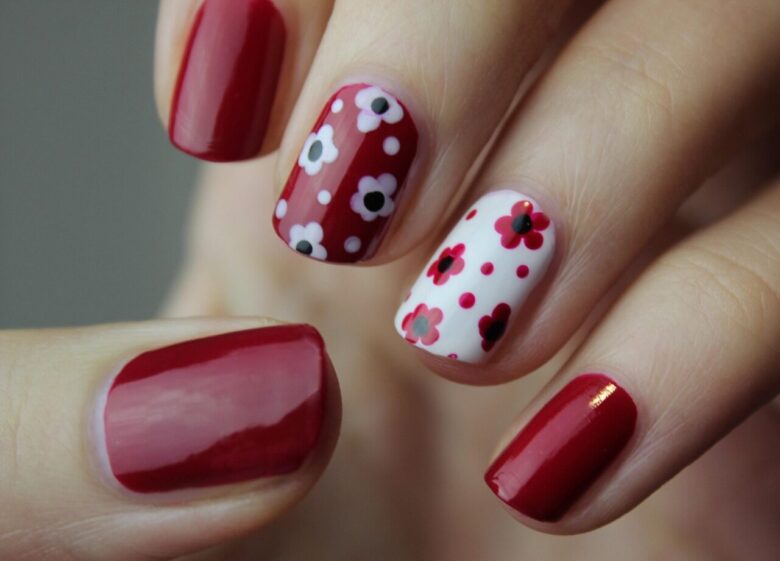
Each accent nail has a separate charge. This is straightforward when only two or four nails include art.
The salon groups art into simple, medium, detailed, and advanced categories with a fixed add-on for each tier.
The artist reserves a longer session and charges according to the estimated design time.
The quoted price covers the complete design shown in the reference image, within clearly defined limits.
Ask whether replacement gems, repairs, or changes made during the appointment will create additional charges.
For simple designs that can be created without a professional appointment, see our guide to beginner nail art at home.
How Much Should You Budget for Ongoing Maintenance?
The initial full set may be the largest individual bill, but ongoing maintenance can become the larger annual expense.
To estimate an ongoing budget:
- Calculate the complete price of one appointment.
- Estimate how many weeks you can safely and comfortably wear the service.
- Divide the price by those weeks.
- Multiply the weekly cost by approximately 4.33.
- Add occasional repairs, new sets, or complete removals.
Do not extend an appointment cycle solely to save money when the enhancement is lifting, cracked, painful, or badly unbalanced.
How Much Should You Tip?
Gratuity customs vary by country, region, business model, and salon. Some salons include service charges, some independent professionals set no-tip prices, and others follow conventional tipping practices.
In many U.S. salons, clients commonly budget approximately 15% to 20% for satisfactory personal-care service. This is an etiquette convention rather than a legal fee or universal requirement.
- Check whether gratuity is already included.
- Ask whether card tips are accepted or cash is preferred.
- Base your budget on the complete service, including art and repairs.
- Check local customs when traveling outside your usual area.
- Discuss serious service problems instead of using the tip as the only form of feedback.
- Use 0% in the calculator when tipping is not customary or the business uses inclusive pricing.
When a Higher Price May Be Reasonable
You may reasonably pay more for:
- Custom extensions requiring structural balance
- Detailed hand-painted art
- Major reshaping or reconstruction
- A longer consultation and appointment
- Specialized gel or extension systems
- Transparent product and removal information
- Careful tool cleaning and workspace practices
- An established portfolio of the exact service requested
A higher price does not automatically guarantee:
- Correct product application
- Better hygiene
- A licensed professional in every jurisdiction
- No allergic reaction
- No lifting or breakage
- Safe or painless removal
- That every add-on is included
- That the design will suit your daily routine
Look for value in the complete service: consultation, technique, cleanliness, product identification, comfort, maintenance advice, and removal planning.
How to Compare Three Local Salons
Compare salons offering the same service and design instead of comparing unrelated menu categories.
| Question | Salon A | Salon B | Salon C |
|---|---|---|---|
| Exact service and product | ____________ | ____________ | ____________ |
| Starting price | $________ | $________ | $________ |
| Removal included? | Yes / No | Yes / No | Yes / No |
| Design price | $________ | $________ | $________ |
| Length and shape fee | $________ | $________ | $________ |
| Repair policy | ____________ | ____________ | ____________ |
| Estimated total | $________ | $________ | $________ |
| Expected appointment time | ____________ | ____________ | ____________ |
Check portfolios for the specific technique you want. A technician who creates excellent short gel manicures may not specialize in extra-long sculpted acrylics, and the reverse may also be true.
Hygiene and Safety Are Part of the Value
Salon licensing, sanitation rules, and permitted practices vary by state and local jurisdiction. Check the appropriate licensing authority where you live when you need to verify a salon or technician.
Ask how metal and other reusable tools are cleaned and disinfected between clients according to local requirements.
Files, buffers, wooden sticks, toe separators, and similar porous items may be intended for one client or one use.
The workspace should address dust and product vapors rather than relying only on fragrance to hide odors.
The technician should be able to explain what system is being applied and how that exact product is removed.
Deep cutting, bleeding, repeated product contact, and working over inflamed skin should not be treated as routine.
Powder should be dispensed without placing several clients’ fingers into the same shared container.
A very low price is not proof of unsafe service, and a luxury price is not proof of excellent hygiene. Ask direct questions and observe the actual practices.
Ways to Spend Less Without Damaging Your Nails
- Choose short natural nails instead of extensions.
- Use regular polish when frequent color changes matter more than long wear.
- Select one or two accent nails instead of detailed art on all ten.
- Choose a simple cream color instead of chrome, gems, or multiple effects.
- Request a quote before adding designs during the appointment.
- Book routine maintenance before major lifting creates extra repair work.
- Keep the same practical shape instead of completely reshaping every visit.
- Use a lower-contrast color when you need the manicure to age gracefully.
- Compare complete local quotes instead of choosing the lowest starting price.
- Remove products correctly rather than peeling them to avoid a fee.
At-home regular polish can also be appropriate when you enjoy maintaining your own natural nails. Our guide to building an at-home manicure kit explains the basic tools.
Pricing Mistakes That Create Checkout Surprises
The advertised amount may cover only short natural nails with one color and no removal.
Gel polish, builder gel, hard gel, and soft-gel extensions have different prices and removal processes.
A neutral-looking set may still include extensions, builder gel, French lines, chrome, or detailed shaping.
The salon cannot quote removal accurately when it does not know whether you have gel polish, dip, acrylic, or hard gel.
Broken corners, lifting, missing extensions, and cracks may require individual reconstruction.
A fill maintains existing structure, while a new set may include complete removal and reconstruction.
Extensions create ongoing fill, repair, rebalance, and removal costs rather than one isolated payment.
Damage caused by peeling or filing may lead to soreness, recovery time, and additional corrective appointments.
When a Manicure Should Wait
Pause cosmetic services and seek qualified advice if you notice:
- Pain, warmth, swelling, throbbing, or bleeding
- Pus or fluid around or beneath a nail
- A new or changing dark streak
- Green, blue, black, or persistent yellow discoloration
- A nail separating from the skin underneath
- Significant thickening, crumbling, pitting, or distortion
- Itching, swelling, blistering, or a spreading rash after product use
- An injury or open area that has not healed
Do not choose the cheapest opaque service simply to hide a change that may need medical evaluation. A nail technician can provide cosmetic services but should not diagnose infection, allergy, or disease.
Frequently Asked Questions
How much does a basic manicure cost in 2026?
A broad U.S. planning range is approximately $20 to $55. Local salon listings can fall below or above this range depending on the city, included hand care, polish brand, appointment length, and salon category.
How much does a gel manicure cost?
Basic gel-polish manicures commonly fall around $30 to $70 in U.S. pricing guides, although current salon listings can be lower or considerably higher. Confirm whether removal, structured base, cuticle work, and art are included.
Why did my manicure cost more than the advertised price?
The advertised amount may have been a starting price. Removal, long nails, special shapes, repairs, French tips, chrome, designs, treatments, taxes, or gratuity may have been added to the base service.
Is nail art normally included?
Usually not unless the menu clearly states that a design is included. Nail art may be charged per nail, by complexity tier, by time, or as a complete custom-set price.
Is an expensive salon always safer or better?
No. Higher prices may reflect location, experience, time, products, or specialized design, but price alone does not prove hygiene, licensing, correct technique, or safe removal. Review the actual service practices.
Can I request a complete quote before the appointment?
Yes. Send photographs of your current nails and desired design, then ask for an estimate that includes removal, service type, length, shape, repairs, art, and additional fees. The final amount may still change if unexpected work is required.
Final Takeaway
The real cost of a manicure is rarely one number printed beside a service name.
Build the price from the base service, removal, length, shape, repairs, design, treatments, local fees, and gratuity. Then consider how often the service will need maintenance and how much removal will cost later.
Ask for an estimated total before product is applied. Show your current nails and inspiration image, confirm exactly what is included, and understand which changes could increase the price.
The best value is not automatically the cheapest or most expensive appointment. It is a clearly priced service that fits your routine, uses appropriate hygiene practices, remains comfortable, and includes a realistic plan for maintenance and removal.
Editorial note: This article provides general cost-planning and nail-care information. Prices and tipping customs vary by location, provider, product, and appointment. DolfiNails does not currently use affiliate links in this guide.
Sources and Further Reading
- Airtasker — U.S. Manicure Cost Guide, Updated 2026
- Fresha — Current Manicure Pricing Examples
- Fresha — Current Gel and Builder-Gel Salon Listings
- Fresha — Current New York Gel-Nail Pricing Examples
- U.S. Food and Drug Administration — Nail Care Products
- Occupational Safety and Health Administration — Health Hazards in Nail Salons
- American Academy of Dermatology — Dermatologists’ Tips for Healthy Nails
- American Academy of Dermatology — Artificial Nails: Tips for Reducing Nail Damage
- Southern Living — Nail Salon Tipping Guidance
Last editorial review: July 17, 2026

The DolfiNails Editorial Team creates practical and carefully researched content about nail care, manicure techniques, nail art, tools, and beauty products. Each article is reviewed for clarity, usefulness, and reader safety to help readers make better-informed decisions about their nail care routines.